𝙃𝙤𝙬 𝙇𝙞𝙫𝙚𝙡𝙞𝙝𝙤𝙤𝙙𝙨 𝙋𝙧𝙤𝙜𝙧𝙖𝙢𝙨 𝙖𝙧𝙚 𝙍𝙚𝙨𝙝𝙖𝙥𝙞𝙣𝙜 𝙍𝙚𝙛𝙪𝙜𝙚𝙚 𝙇𝙞𝙫𝙚𝙨 𝙩𝙝𝙧𝙤𝙪𝙜𝙝 𝙀𝙣𝙙𝙖𝙢 𝙃𝙤𝙢𝙚 𝙤𝙛 𝙃𝙤𝙥𝙚 (𝙀𝙃𝙃𝙊𝙋)
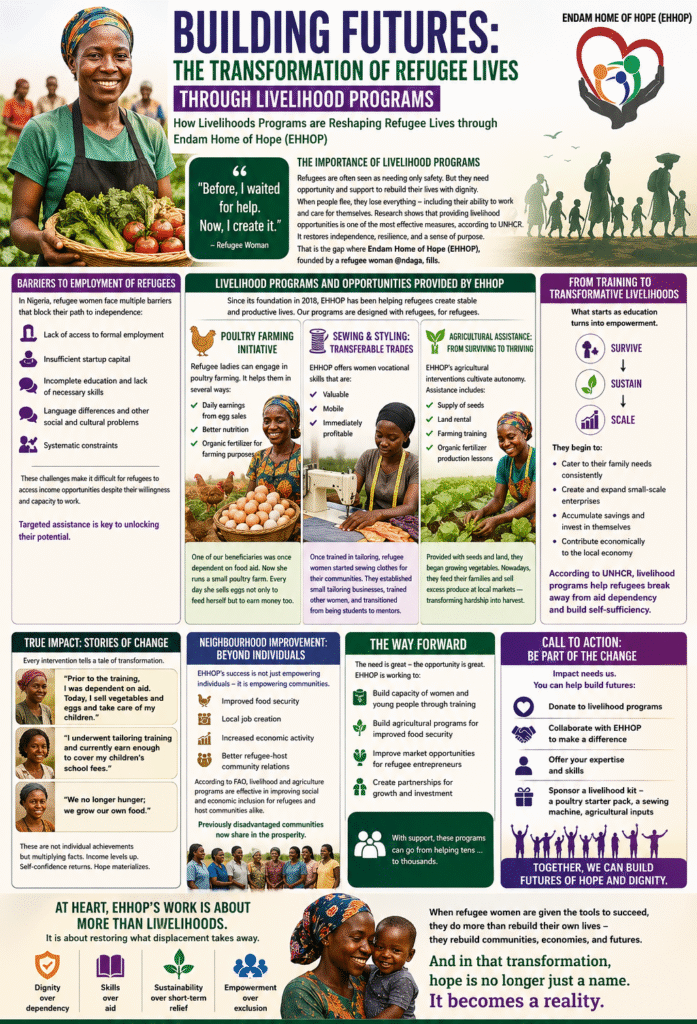
𝗧𝗵𝗲 𝗜𝗺𝗽𝗼𝗿𝘁𝗮𝗻𝗰𝗲 𝗼𝗳 𝗟𝗶𝘃𝗲𝗹𝗶𝗵𝗼𝗼𝗱 𝗣𝗿𝗼𝗴𝗿𝗮𝗺𝘀
“Before, I waited for help. Now, I create it.”
This is what a refugee lady says about her newfound life. It shows the misconception that refugees are only in need of safety. They need opportunity and support.
When people flee, they lose everything, including their ability to work and care for themselves. However, research suggests that providing refugees with livelihood opportunities is one of the most effective measures according to UNHCR, the UN Refugee Agency.
It restores independence, resilience, and a sense of purpose, allowing refugees to get back on their feet. That is the gap where Endam Home of Hope (EHHOP), founded by a refugee woman Yvonne Ndaga fills.
𝗕𝗮𝗿𝗿𝗶𝗲𝗿𝘀 𝘁𝗼 𝗘𝗺𝗽𝗹𝗼𝘆𝗺𝗲𝗻𝘁 𝗼𝗳 𝗥𝗲𝗳𝘂𝗴𝗲𝗲𝘀
In Nigeria, the road for refugee women towards being independent and able to provide is obstructed by many factors:
• Lack of access to formal employment
• Insufficient startup capital
• Incomplete education and lack of necessary skills
• Language differences and other social and cultural problems
• Systematic constraints
According to research, all these factors make it difficult for refugees to seek out income opportunities despite their willingness and capacity to work.
Therefore, providing refugees with targeted assistance will ensure that their potential is unlocked.
Livelihood Programs and Opportunities Provided by Endam Home of Hope (EHHOP)
Since its foundation in 2018, EHHOP has been helping refugees to create stable and productive lives. As our program works with refugees, we have a good understanding of the situation and how to deal with it.
🐔 𝗣𝗼𝘂𝗹𝘁𝗿𝘆 𝗙𝗮𝗿𝗺𝗶𝗻𝗴 𝗜𝗻𝗶𝘁𝗶𝗮𝘁𝗶𝘃𝗲
As part of the Endam Home of Hope (EHHOP) activities, refugees can get engaged in poultry farming.
It helps them in several ways:
• Daily earnings from egg sales
• Better nutrition
• Organic fertilizer for farming purposes
Indeed, according to research, agricultural activities greatly improve the health and well-being of refugees and increase self-sufficiency.
One of our beneficiaries was once dependent on food aid. Now she runs a small poultry farm. Every day she sells eggs not only to feed herself but to earn money too.
𝗦𝗲𝘄𝗶𝗻𝗴 & 𝗦𝘁𝘆𝗹𝗶𝗻𝗴: 𝗧𝗿𝗮𝗻𝘀𝗳𝗲𝗿𝗮𝗯𝗹𝗲 𝗧𝗿𝗮𝗱𝗲𝘀
Endam Home of Hope (EHHOP) offers women vocational skills that are:
• Valuable
• Mobile
• Immediately profitable
The connection between vocational education and employment success has been proven by numerous studies that highlight its significant impact on income generation.
Once trained in tailoring, refugee women started sewing clothes for their communities. They established small tailoring businesses, trained other women, and transitioned from being students to mentors.
🌱 𝗔𝗴𝗿𝗶𝗰𝘂𝗹𝘁𝘂𝗿𝗮𝗹 𝗔𝘀𝘀𝗶𝘀𝘁𝗮𝗻𝗰𝗲: 𝗙𝗿𝗼𝗺 𝗦𝘂𝗿𝘃𝗶𝘃𝗶𝗻𝗴 𝘁𝗼 𝗧𝗵𝗿𝗶𝘃𝗶𝗻𝗴
EHHOP‘s agricultural interventions exceed planting seeds, cultivating autonomy.
Assistance includes:
• Supply of seeds
• Land rental
• Farming training
• Organic fertilizer production lessons
Through agricultural training, refugees become food secure, earn money, and integrate economically into their environments.
Provided with seeds and land, they began growing vegetables. Nowadays, they feed their families and sell excess produce at local markets transforming hardship into harvest.
𝗙𝗿𝗼𝗺 𝗧𝗿𝗮𝗶𝗻𝗶𝗻𝗴 𝘁𝗼 𝗧𝗿𝗮𝗻𝘀𝗳𝗼𝗿𝗺𝗮𝘁𝗶𝘃𝗲 𝗟𝗶𝘃𝗲𝗹𝗶𝗵𝗼𝗼𝗱𝘀
What starts as education turns into empowerment.
Beneficiaries of EHHOP‘s programs undergo an incredible trajectory:
𝗦𝘂𝗿𝘃𝗶𝘃𝗲 → 𝗦𝘂𝘀𝘁𝗮𝗶𝗻 → 𝗦𝗰𝗮𝗹𝗲
They begin to:
• Cater to their family needs consistently
• Creates and expands small-scale enterprises
• Accumulate savings and invest in themselves
• Contribute economically to the local economy
It echoes a wider global consensus: According to UNHCR, the UN Refugee Agency, livelihood programs help refugees break away from aid dependency and build self-sufficiency.
𝗧𝗿𝘂𝗲 𝗜𝗺𝗽𝗮𝗰𝘁: 𝗦𝘁𝗼𝗿𝗶𝗲𝘀 𝗼𝗳 𝗖𝗵𝗮𝗻𝗴𝗲
Every intervention tells a tale of transformation:
“Prior to the training, I was dependent on aid. Today, I sell vegetables and eggs and take care of my children.”
“I underwent tailoring training and currently earn enough to cover my children’s school fees.”
“We no longer hunger; we grow our own food.”
These are not individual achievements but multiplying facts.
Income levels up. Self-confidence returns. Hope materializes.
𝗡𝗲𝗶𝗴𝗵𝗯𝗼𝘂𝗿𝗵𝗼𝗼𝗱 𝗜𝗺𝗽𝗿𝗼𝘃𝗲𝗺𝗲𝗻𝘁: 𝗕𝗲𝘆𝗼𝗻𝗱 𝗜𝗻𝗱𝗶𝘃𝗶𝗱𝘂𝗮𝗹𝘀
EHHOP‘s success is not just empowering individuals-it is empowering communities.
These include:
• Improved food security
• Local job creation
• Increased economic activity
• Better refugee-host community relations
FAO demonstrates that livelihood and agriculture programs are effective in improving social and economic inclusion for refugees and host communities alike.
Previously disadvantaged communities now share in the prosperity.
𝗧𝗵𝗲 𝗪𝗮𝘆 𝗙𝗼𝗿𝘄𝗮𝗿𝗱
The need is great-the opportunity is great.
EHHOP is working to:
• Build capacity of women and young people through training
• Build agricultural programs for improved food security
• Improve market opportunities for refugee entrepreneurs
• Create partnerships for growth and investment
With support, these programs can go from helping tens … to thousands.
𝗖𝗮𝗹𝗹 𝘁𝗼 𝗔𝗰𝘁𝗶𝗼𝗻: 𝗕𝗲 𝗣𝗮𝗿𝘁 𝗼𝗳 𝘁𝗵𝗲 𝗖𝗵𝗮𝗻𝗴𝗲
Impact needs us.
You can help build futures:
• Donate to livelihood programs
• Collaborate with EHHOP to make a difference
• Offer your expertise and skills
• Sponsor a livelihood kit – a poultry starter pack, a sewing machine, agricultural inputs
At heart, EHHOP’s work is about more than livelihoods.
It is about restoring what displacement takes away; Dignity over dependency, Skills over aid, Sustainability over short-term relief, Empowerment over exclusion
When refugee women are given the tools to succeed, they do more than rebuild their own lives, they rebuild communities, economies, and futures. And in that transformation, hope is no longer just a name. It becomes a reality.
About The Author
